IMPACTING EDUCATION
Learning that works.
Across Africa, access to education has expanded, but access and learning remain deeply uneven, especially at secondary level.
More children are in school than ever before, but too many never reach secondary education, leave before completing it, or attend schools that are not safe, well-led, or able to support real learning.
In the poorest countries, children are still far less likely to attend or complete school, and even when they do, many are not gaining the skills they need.
The challenge is not only getting children into classrooms.
It is ensuring that the schools they attend actually work.
Our Approach
We focus on what makes schools effective, and how to deliver that consistently, at scale. We do this in two ways:
1. Building and running great schools
We operate schools in underserved communities where students are safe, supported, and able to learn.
These schools show what effective education looks like in practice, with strong leadership, supported teachers, and systems that enable learning.
2. Strengthening education systems
We work with governments to take what works further, improving how schools are led, supported, and managed across public systems.
Rather than creating parallel systems, we strengthen the ones that already exist.
This dual approach allows us to combine deep impact with system-wide scale.
What Makes a School Work
A school is more than a building. What matters is how it is led, how teachers are supported, and how students experience learning every day.
Across our work, we focus on the elements that make the biggest difference:
Strong leadership that drives accountability and direction
Supported teachers with practical training and ongoing coaching
Safe, inclusive environments where all students can learn and thrive
Effective systems that help schools function day to day
These are not abstract ideas. They are proven approaches, developed and refined in real schools.
From Schools to Systems
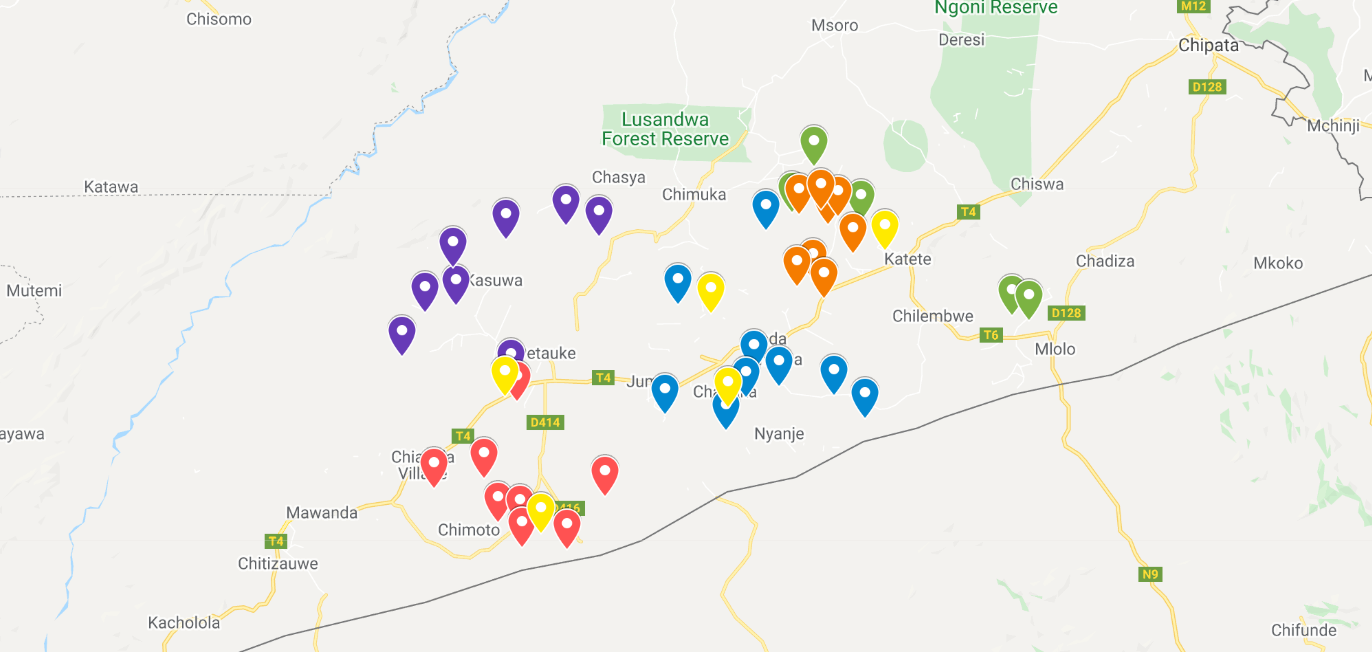
Our schools are not the endpoint. They are the starting point. We use what we learn from running schools to help governments strengthen public education systems, so that more schools can deliver the same level of quality. This means our impact extends far beyond the schools we directly operate. Today, this work reaches hundreds of thousands of students each year across Uganda, Zambia, and Ghana.
Why It Matters
When schools work, students stay in education longer, learn more, and leave better prepared for what comes next. When they don’t, the consequences are long-term, for individuals, for communities, and for entire countries. By improving both schools and systems, we are helping ensure that access to education leads to real opportunity.
Our Ambition
Africa will be home to the world’s largest youth population. The quality of education this generation receives will shape the future, not just for Africa, but globally.
Our goal is to help build education systems that work, so that every young person has the opportunity to thrive.
THE ESCHOOL 360
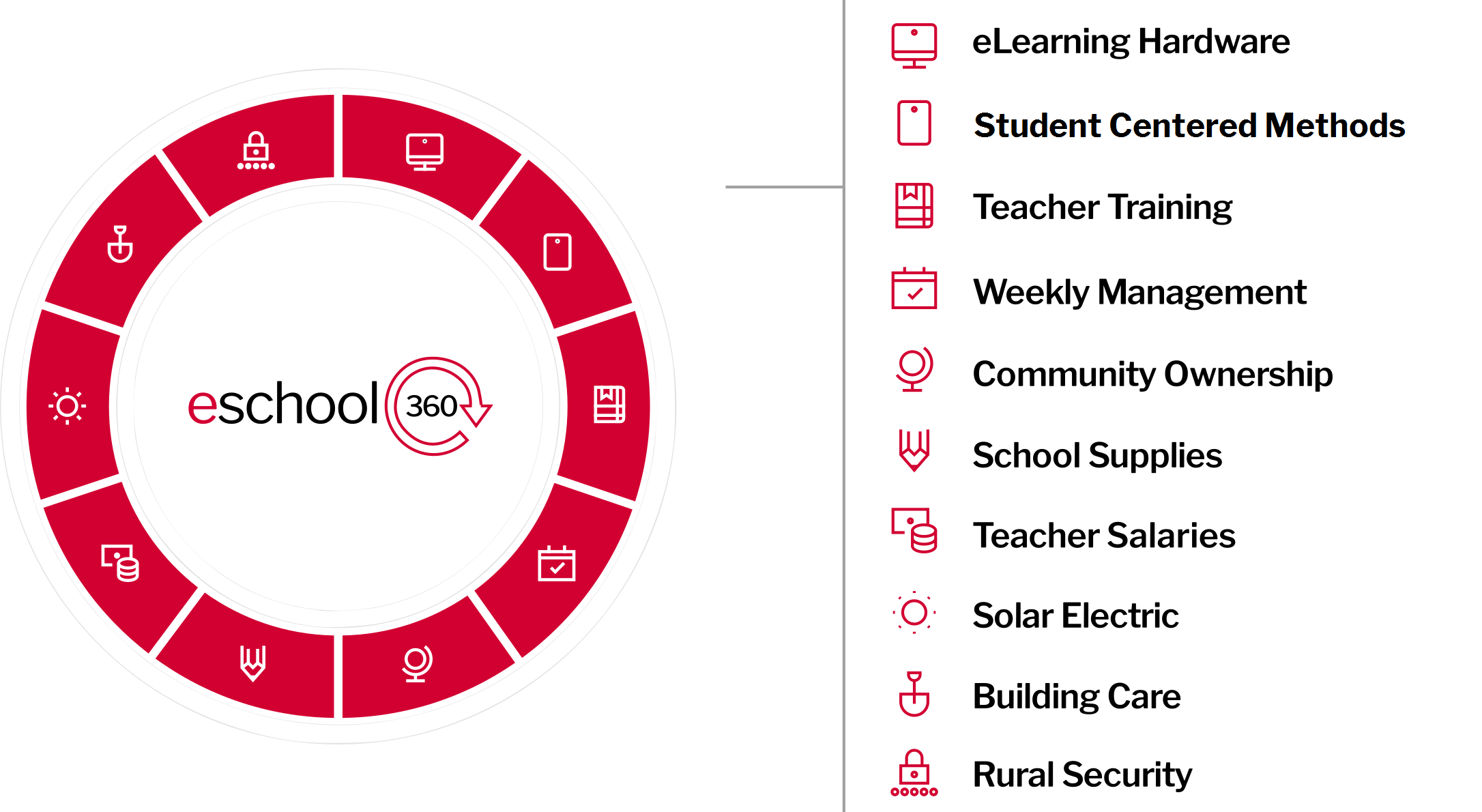
Weekly Management
Professional staff (including teacher supervisors and a technology expert) support every school, providing accountability, on-site support, and training.
School Supplies
Since the program targets under-resourced families, students, teachers, and schools are given adequate school supplies.
Solar
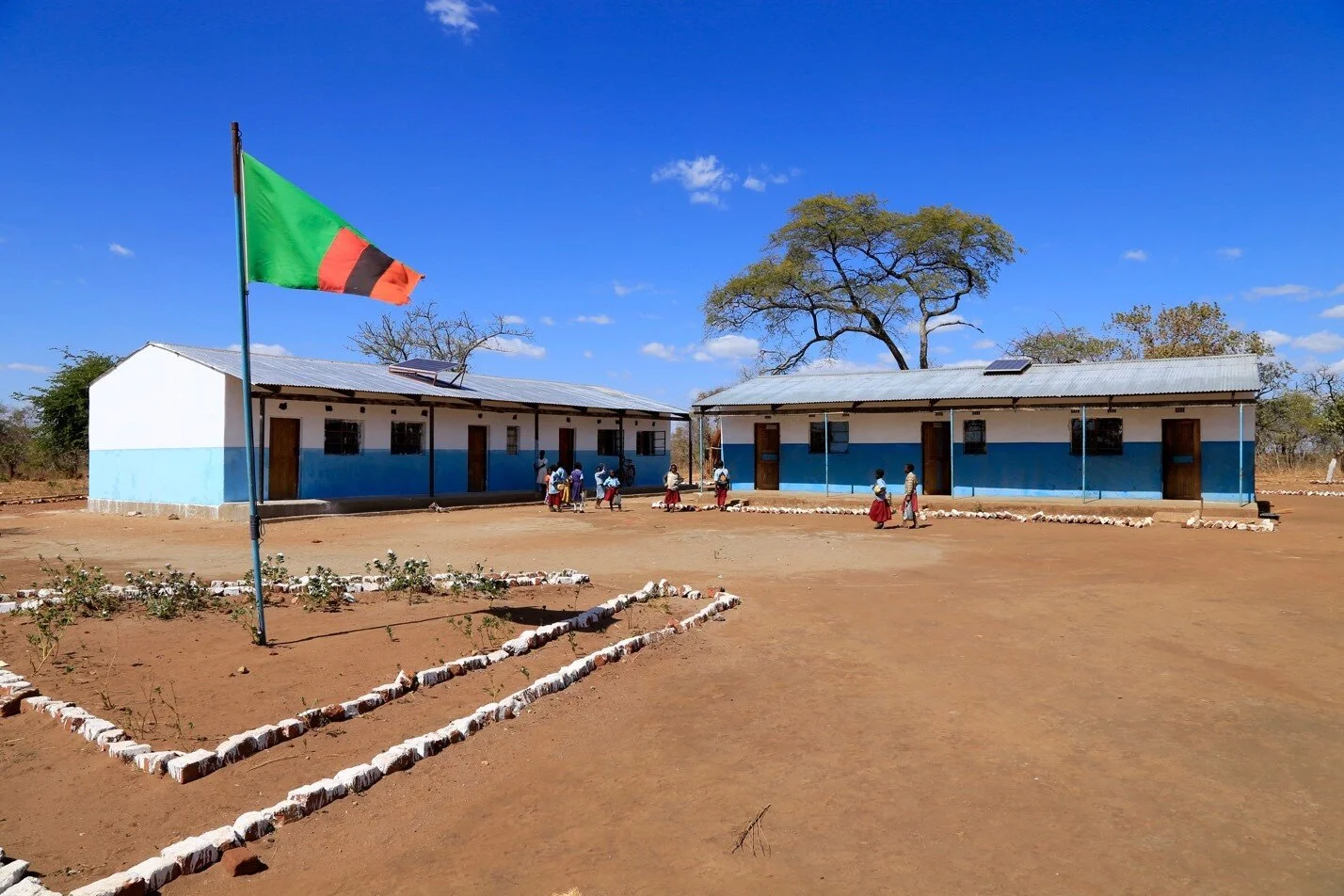
Since our schools are “off the grid,” electricity in our schools is generated from solar power installed on the roofs in an effort to conserve and protect the environment using cost-effective means.
Teacher Salary
In contrast to other community schools, where teachers are often volunteers who are paid sporadically and poorly, our teachers receive a living wage and benefits.
eLearning Hardware
Impact Network provides teachers with a tablet and projector to deliver class lessons. The tablets contain thousands of lessons and lesson plans that adhere to the Zambian national curriculum, are approved by the Ministry of Education, and are taught in the local language.
STUDENT Centered METHODS
The lesson resources provide activity-oriented lesson plans for each day, designed to move learning away from traditional rote learning. They include valuable life lessons in addition to academic content.
Teacher Training
Teachers are hired locally, providing crucial job creation in rural areas. Weekly coaching sessions help tailor support to the needs of individual teachers. During monthly training sessions, teachers come together from across our schools to participate in a series of workshops.
Community Ownership
Ownership is fostered through community activities. Each school has a Parent Teacher Association that provides input, parental involvement, and support.
Rural Security
In addition to community and teacher ownership, steel doors and a security guard are provided.
Building Care
Respectable and safe facilities are key to providing a quality learning environment for students. Buildings are constructed and maintained by local workers.
EARLY CHILDHOOD EDUCATION
Across the globe, investing in the earliest years of a child’s development has been proven to improve future learning outcomes and keep children in school longer. Early Childhood Education supports cognitive and socio-emotional developments during early childhood when the brain matures faster than any other time in life. Indeed, it has even been proven to improve future earnings by up to 25 percent (World Bank Group, 2017). An additional dollar invested in quality early childhood programs has a return of between $6 and $17.
Impact Network Early Childhood classes operate across 8 schools and 350 children, and are divided into two classes: Middle Class (aged 3-4) and Reception Class (aged 5-6). There are a maximum of 25 learners in each class in order for the teachers to be able to manage the classes and provide appropriate support to each individual child. Impact Network uses a play-based approach to learning and a child-friendly space. The play-based approach offers many opportunities for exploration and manipulation across a number of domains including cognitive, physical and socio-emotional.
Using play for instruction takes a few different shapes in the Impact Network ECE classes. Free play allows children to lead their own playing and explore the world and classroom around them. Guided play is a child-led approach with guidance from a trained adult who is able to scaffold learning appropriately for children. Direct instruction is adult-designed and controlled but still uses play to engage children in different topics and skills.